Introduction to 50 interesting facts about solar energy
I still remember standing on a rooftop years ago, watching a technician explain why the sun holds such boundless potential. That day taught me why 50 interesting facts about solar energy deserve real attention, not just a passing glance. Sustainable energy stands as a true cornerstone of modern technology, and solar power has quietly become a global necessity, reshaping homes, businesses, and entire economies. Students and adults alike benefit from understanding renewable resources, especially across India, where development and sustainability rank among the growing priorities of the decade.
Rising electricity costs, frequent power cuts, and mounting environmental concerns have pushed solar energy into one of the most discussed topics worldwide. Solar keeps shaping a cleaner, more affordable energy future, and once you dig into these 50 interesting facts about solar energy, you understand exactly why it keeps dominating the renewable energy conversation.
The Science and History Behind Solar Power
Earth absorbs enough sunlight in a single hour to cover global energy needs for an entire year. That inexhaustible supply separates solar completely from fossil fuels, since it draws from a renewable resource that never runs dry. The solar industry has held an average annual growth rate above 40% across the last decade alone.
Among the oldest 50 interesting facts about solar energy, the ancient Greeks and Romans used burning mirrors to light torches during religious ceremonies, an early form of solar energy. By the 7th century BC, ancient people already used sunlight to start fires with simple magnifying glasses. Centuries later, Edmond Becquerel discovered the photovoltaic effect in 1839, and Bell Labs created the first practical silicon solar cell in 1954, reaching 6% efficiency. Today’s commercial panels exceed 26% efficiency, while laboratory cells have crossed 47%.
Read More About Xlecz
Why Solar Energy Matters for Homes and Businesses
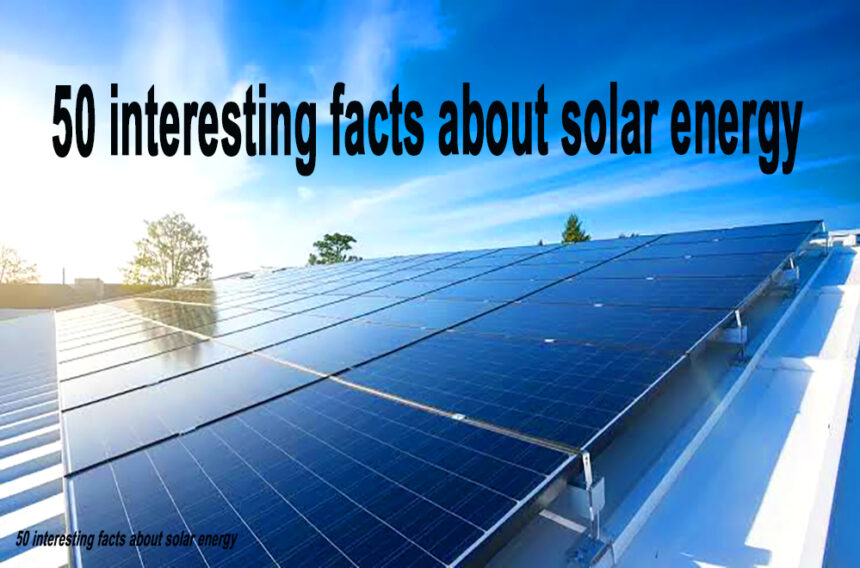
Some of the most practical 50 interesting facts about solar energy involve savings: solar panels significantly reduce electricity bills, and net metering lets homeowners sell excess electricity back to the grid, turning savings into real income. Solar power systems demand only minimal maintenance, which locks in genuine long-term savings for decades. The cost of solar panels has dropped more than 80% since 2010, making solar energy far more accessible than ever.
Solar-powered transportation is spreading fast, from cars to planes, and wearable solar technology now brings flexible panels into everyday clothing, letting people charge devices on the move. Floating solar farms save land and cut water evaporation, while solar in agriculture powers irrigation systems and supports sustainable farming practices.
Global Numbers That Prove Solar’s Rise
Some of the biggest 50 interesting facts about solar energy come from global leaders: China leads the world in solar energy production, followed by the United States and Japan, and China alone produces roughly 80% of the world’s solar panels. Germany has poured serious investment into solar power, leading Europe in installed capacity. India enjoys nearly 300 sunny days annually, making it a true solar goldmine, and plans to install 500 GW of renewable energy by 2030.
Las Vegas now runs on 100% renewable energy, and the International Space Station generates power through panels covering an area past a football field. Solar-powered aircraft have already circumnavigated the globe, with the Solar Impulse 2 completing a 25,000-mile journey without burning a drop of fuel. By 2050, solar energy could supply 70% of global electricity, according to the International Energy Agency.
Read More About solar panel installation
Environmental and Economic Impact of Solar Energy
Among the most reassuring 50 interesting facts about solar energy: solar power systems release no air pollution and no greenhouse gases while running. A typical residential solar PV system saves more than 3 tons of carbon dioxide emissions every year. Around 90% of solar panel components get recycled, including silicon, aluminum frames, and glass.
On the money side, solar panel module costs have fallen 85% since 2010, making solar the cheapest form of electricity in modern history. The solar industry now employs nearly 280,000 people in the United States alone, with job growth rates running five times faster than the rest of the economy. Homes fitted with solar panels sell for about 4.1% more than comparable homes without them, adding roughly $15,000 to property values.
Common Myths About Solar Energy
One of the most misunderstood 50 interesting facts about solar energy is this: many people believe solar only works in sunny climates, but solar panels still produce electricity on cloudy days. Another myth claims solar panels harm roofs, yet properly fitted panels avoid damage and can even shield roofs from harsh elements. Some also assume solar energy is too expensive, but decreasing costs and generous incentives now make it genuinely affordable for both homeowners and businesses. Panels also need only minimal maintenance, mostly routine cleaning, debunking the myth that they require excessive maintenance.
Solar Energy Across India
Solar energy comes straight from the Sun, and India receives sunlight for about 300 days a year. Rajasthan hosts large solar power plants, including the Bhadla Solar Park, ranked among the world’s largest. Solar cookers, solar street lights, and solar pumps already help farmers irrigate fields across Indian villages, while the Indian government actively promotes rooftop solar systems. Panels convert light into direct current, or DC, before inverters switch it into usable AC power, supporting broader sustainable development and cutting fossil fuel imports.
Future Trends Shaping Solar Technology
Among the newest 50 interesting facts about solar energy: artificial intelligence now optimizes solar panel efficiency in real-time, using machine learning to predict weather patterns and adjust panel positioning. Space-based solar power stations are already in development, with Japan and China planning orbital installations by 2030 that could beam power to Earth. Perovskite solar cells are pushing past 30% efficiency in laboratories, and quantum dot solar cells could one day reach efficiencies past 60%.
Conclusion: The Bright Future Behind 50 interesting facts about solar energy
These 50 interesting facts about solar energy prove that solar reaches far beyond a simple backup to fossil fuels — it stands as a genuinely transformative technology reshaping our world. Heading into the years ahead, solar technology will keep playing a bigger role in fighting climate change, creating jobs, and expanding energy access for communities everywhere. The sun offers a truly inexhaustible source of clean energy, and human ingenuity keeps finding smarter ways to use it. Whether you’re considering residential solar panels for your own roof or simply fascinated by these 50 interesting facts about solar energy, one thing stays clear: the future looks bright, powered entirely by the sun.
FAQs
- What are some interesting facts about solar energy?
Some of the most interesting facts about solar energy include how the sun delivers more power in one hour than the world uses in a whole year, and how solar panels still generate electricity even on cloudy days. - 2. Why is solar energy considered a renewable resource?
Solar energy is a truly renewable resource because it comes from the sun, which will keep shining for billions of years, unlike fossil fuels that eventually run out. - How many years do solar panels usually last?
Most solar panels last between 20 and 25 years, and some high-quality models continue producing electricity for up to 30 years with only minimal maintenance.