I have walked across enough rooftops and open fields to notice one thing: people praise solar panels but rarely ask what happens after sunlight hits them. This article puts that missing piece in the spotlight. A Photovoltaic invertersits quietly inside homes, businesses, and industrial sectors, and it works as the critical component that turns raw energy into something a plug can actually use.
This comprehensive guide walks through the main types, the main features, and how a suitable model changes what residential and commercial properties get out of their solar plants. We will look at direct current, alternating current, the power grid, solar power, inverters in general, and the usable form of energy produced by every set of solar panels you install.
What is a Photovoltaic inverter?
Picture the electrical grid as a strict gatekeeper — it only accepts alternating current, so a Photovoltaic inverter handles the DC to AC conversion every single day without complaint. Sunlight releases electrons from a semiconductor material through the photovoltaic effect, and that reaction builds a DC electrical current that needs somewhere to go. I like calling the inverter the brain of a solar system, because it does more than swap currents: it runs energy production checks, keeps real-time control over the proper functioning of your panels, and watches temperature and solar irradiation shifts through MPPT, or Maximum Power Point Tracking, algorithms. This same electronic device manages system management, tracks energy flow, and performs production optimization so your overall performance stays high. On the safety side, it guards against surges and short circuits, adds protective devices, supports grid compliance, and enables self-consumption for household appliances and power grids alike. It can also detect faults, optimize panel performance, and give diagnostic information, all while feeding clean output back for self-consumption.
How Do They Work?
Inside every unit, an MPPT style Maximum Power Point Tracking controller hunts for the maximum power your solar panels can give at any moment, adjusting voltage and current until the output stops wasting a single watt. That job produces heat, and the electronic mechanisms inside dissipated it through fans or plain convection, whichever the manufacturer chose. The whole process turns linear current into sinusoidal current, meaning direct current becomes usable alternating current, or simply AC, ready for the power grid or your own electrical devices. Greenvolt Next built its reputation on making photovoltaic inverters reliable enough that businesses stop worrying about wasted electrical energy, because every solar panel energy production solution should cut energy bills, not create new headaches.
Read More About Solar Panel Ontarioin
Types of Photovoltaic inverters
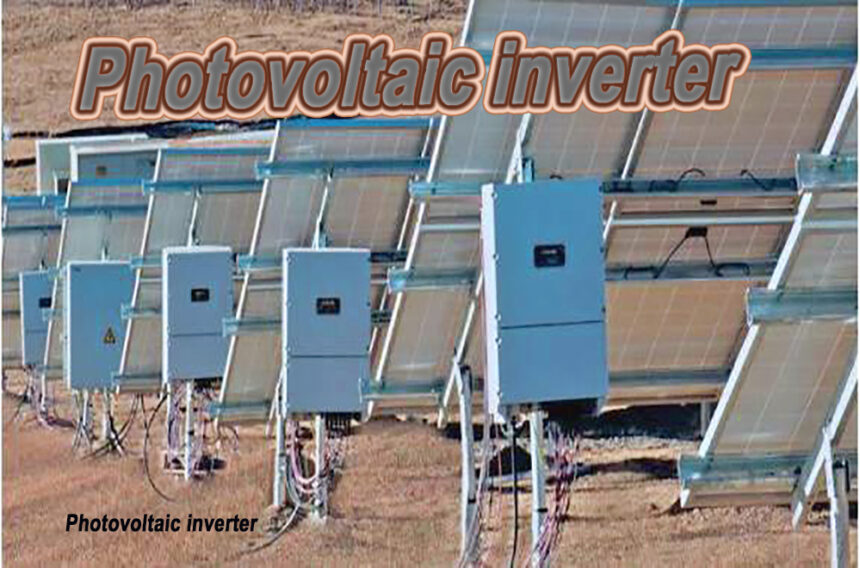
String inverters remain the go-to pick for Homes and small businesses because they stay cost-effective and easy to install. Microinverters, on the other hand, handle complex roofs and shading issues far better, since panel-level optimization lets each individual panel run its own detailed monitoring without dragging down the rest of the array. Central Inverters step in for utility-scale solar farms, offering high capacity across industrial plants and commercial plants that need serious output. Hybrid inverters bring battery storage and grid connections together, giving homes with energy storage a smoother path to solar production. Meanwhile, Off-grid Inverters serve remote areas with limited grid access, pairing with battery backup to keep solar running in residential plants far from any city line.
Applications of Photovoltaic inverters
I have seen homeowners install a 5kW system with a hybrid inverter just to trim their electricity bills and inch closer to energy independence — and in the U.S., residential solar installations crossed 6 GW in 2023 alone. Commercial and Industrial Buildings such as warehouses, office buildings, and factories lean on string inverters or full three-phase inverters to manage heavy power loads while chasing sustainability goals; one commercial solar project in Germany, rated at 500 kW, keeps a refrigerated logistics center running through a mix of string inverter units and monitoring systems. Utility-Scale Solar Farms rely on Central inverters, often rated between 500 kW–2 MW capacity, to push power from solar farms into the national grid, and countries like China, India, and the U.S. keep expanding their solar farm deployment with fresh gigawatt-level installations every year. Solar microgrids are already reshaping rural electrification across Africa and Southeast Asia, proving that grid-tied solar systems are not the only path to clean power and lower operational costs.
Read More About Xlecz
How to Choose the Right Inverter
System size decides a lot here — bigger setups usually call for three-phase inverters or central inverters, while an undersized inverter chokes production and an oversized inverter just wastes your budget without becoming any more economically viable. Shading conditions push people toward microinverters, since they handle multi-angle installations with more flexibility than a single string inverter ever could. If battery integration matters to you, hybrid inverters become the obvious type of connection. Look for remote monitoring through Wi-Fi or dedicated apps, plus software updates that keep performance climbing over time. As for real numbers, models like the Axpert MAX TWIN 8K run at 8000 VA, or 8000 W, supporting up to 6 units in parallel at 230 VAC, a 170–280 VAC range, and 93% efficiency, with 16000 VA of surge headroom, while the Axpert MAX TWIN 11K pushes to 11000 VA, or 11000 W, at 22000 VA surge and the same 90–280 VAC appliance range. Run a proper power assessment first, factor in monitoring needs, and treat domestic power supply and three-phase supply as separate decisions entirely.
Main Features of Photovoltaic inverters
Power and sizing always come first: a 3 kW plant pairs naturally with an inverter of matching inverter power, while single-phase inverters covering 3 to 6 kW suit most residential jobs and three-phase inverters with higher powers fit commercial plants better. Durability varies more than people expect — average lifespan sits around 10 years, but high-end models can stretch to 15 years, while cheaper models sometimes need replacement after just 5 years. Quality and routine maintenance decide which end of that range your component lands on, so matching photovoltaic system capacity to the right unit protects your investment from day neo.
Read More About Solar Panel Ontarioin
Performance and Efficiency of Photovoltaic inverters
High-quality models now reach efficiencies above 98%, which means losses during conversion efficiency stay small and energy yield stays high. Regular periodic checks matter more than people admit: look for dust, moisture, visible damage, or odd anomalies on the indicator lights and displays, since these often flag safety issues before they turn serious. On the regulatory side, Italy requires CEI 0-21 for low voltage and CEI 0-16 for medium voltage systems, and the country backs this up with incentives and tax deductions that offset expenditures on photovoltaic systems and connected storage systems. None of that performance matters without consistent maintenance, since even the best direct current to alternating current conversion drifts over its lifespan without upkeep.
Future Trends in Photovoltaic inverters
Smart Inverters are already leaning on AI algorithms for predictive maintenance, catching problems before they cost you a single kilowatt. New models now chase higher efficiency, with some reaching 98.5% conversion efficiency, and advanced inverters increasingly offer grid services that help stabilize the grid by balancing voltage and frequency in real time.
Read More About solar panel installation
Conclusion
Homeowners, engineers, and policymakers all benefit from understanding this critical component, because a properly installed Photovoltaic inverterdecides whether the benefits of solar energy ever reach a laptop, a national grid, or anything between. Pick the right model, focus on installing correctly, and stay on top of maintenance, and your solar energy system stays reliable, smart, and usable for years. As solar power keeps its global rise, demand for high-performance inverters will only climb, and every energy decision homeowners make about optimal performance, operation, and delivering megawatts back to the grid depends on this one quiet solar panels partner doing its job right.
FAQ 1 – What is the average lifespan of a photovoltaic inverter?
Quality parts paired with routine maintenance typically push the average lifespan of a unit close to 10 years, sometimes well beyond it.
FAQ 2 – How can I monitor the performance of the inverter?
Most models today ship with built-in displays or companion mobile applications that hand you real-time monitoring from a phone or tablet.
FAQ 3 – Is it possible to integrate a storage system after installation?
Yes — hybrid inverters stay compatible with storage systems long after installation, so later integration is rarely a problem.
FAQ 4 – What are the signs of malfunctioning of the inverter?
Watch for red lights, sudden error messages, or production that drops below expected levels, since all three usually point to failures worth investigating fast.
FAQ 5 – How much does the inverter impact the overall cost of the system?
Expect the unit to account for roughly 10-15% of the total cost of your system, though treating it as an investment in efficiency and safety pays off over time.