Hot air and damp air hurt barns, sheds, and coops. Wiring power to far buildings costs a lot. A solar fan fixes both problems with sunlight and a little planning.
This guide explains how a solar fan works, which types suit which space, and how to size one. You will also learn where small units fail. Read it before you spend money.
What a Solar Fan Is and How It Works
A solar fan is a fan that runs on power from a solar panel. The panel makes direct current electricity when light hits it. A brushless DC motor uses that power to spin the blades. No grid wiring is needed.
Most units work in a simple way. When the sun rises, the fan starts. When light fades, the fan slows or stops. This match is useful, since buildings get hottest when the sun is strongest.
A basic solar fan has three parts. These are the panel, the fan, and the controls. Better models add a thermostat, a humidistat, a speed controller, or a battery. Each extra help in a different way.
Read More About: 500 w solar panel
Types of Solar Fan Setups
A direct drive unit connects the panel straight to the motor. It is simple, cheap, and reliable. It only runs when the sun shines. That is fine for cooling, since heat follows the sun.
A hybrid unit adds a grid or battery link. It keeps the fan running when light is weak. This helps in humid weather or at night. Hybrid units cost more but give steadier ventilation.
A battery backed setup stores solar energy for later. It supports night ventilation and cloudy spells. It needs a charge controller and a battery, so it costs more and needs care. Pick the type that matches your space and your risk.
Read More About: Are Solar Panels Worth It?
QuietCool Solar Utility Fan for Small Spaces
The QuietCool solar utility fan is a small, plug free unit built for tiny buildings. It has an integrated panel that makes about 2.5 watts. The fan inside uses about 2 watts. It moves roughly 33 cubic feet of air each minute.
It works well in sheds, dog houses, chicken coops, small greenhouses, and portable restrooms. The maker says it runs steadily in strong light and works on and off in weaker light. You mount it and it starts, with no wiring.
Know its limits. A QuietCool solar utility fan moves little air. It cannot cool a barn or a large workshop. Use it as a light assist for small spaces, and choose bigger gear for bigger buildings.
Solar Powered Exhaust Fan Options for Larger Spaces
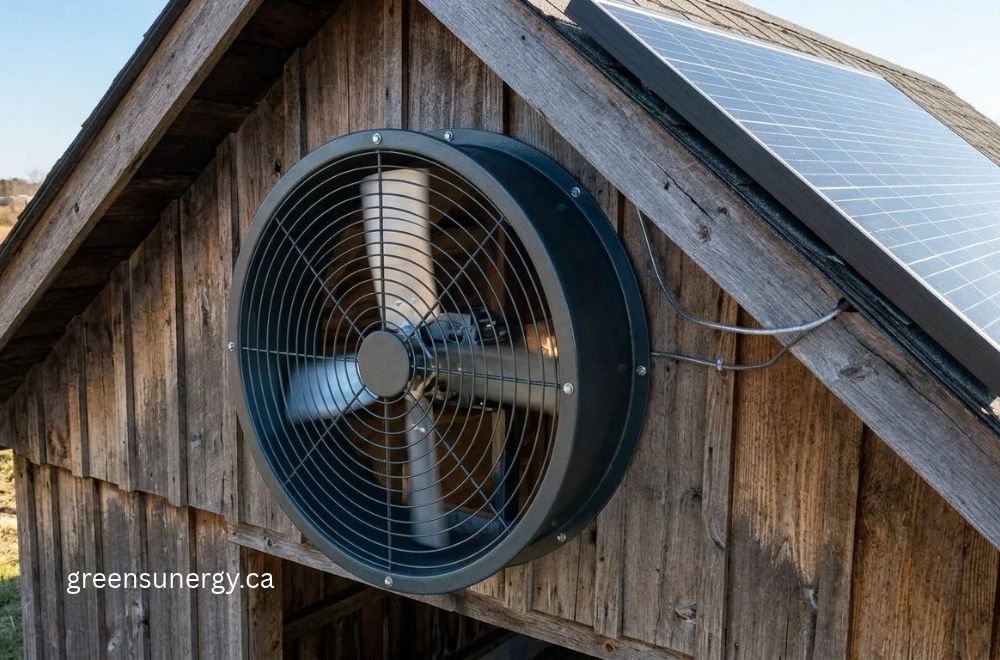
A solar powered exhaust fan pulls hot, stale air out of a building. Fresh air enters through vents or doors. This steady flow cuts heat, moisture, and odor. Larger models are made for attics, garages, barns, and greenhouses.
Many mid-size units move about 1,000 to 3,000 cubic feet per minute. They use panels from 20 to 100 watts. Some have a 12-volt DC fan and a separate panel. Others bundle a panel and a fan in one gable or roof mount.
Choose a unit with a thermostat if possible. The fan then starts only when the space is warm. Look for a durable housing, a bird screen, and a decent warranty. A strong solar powered exhaust fan saves energy and protects what you store inside.
Solar Fans for Barns and Livestock Buildings
Barns need steady airflow. Animals make heat, moisture, and ammonia. Poor air raises stress and disease risk. Good ventilation supports health, comfort, and better feed use. Always follow advice from your vet or agriculture extension office.
Solar fans for barns must be large enough for the space. A tiny fan will not help. Most barns need several mid-size or large fans, or a hybrid design that adds grid power. Solar suits remote barns, hay storage, and loft ventilation especially well.
Placement matters. Put exhaust fans high on the warm side. Provide inlet vents low on the opposite side. Air should sweep through the building and not short circuit. Solar fans for barns work best with a clear air path and enough inlet area.
Solar Outdoor Fan Uses for Patios, Porches, and Work Areas
A solar outdoor fan can cool a patio, a porch, a pergola, or a worksite. Some use a portable panel on a long cable. Others bundle a panel and a fan on a stand. They work well where power outlets are far away.
Weather matters. Choose a unit with a good ingress protection rating for rain and dust. Place the panel in full sun and the fan in shade. Plug free cooling can make outdoor spaces much more comfortable on hot afternoons.
A solar outdoor fan also helps at campsites, kennels, and market stalls. Expect modest airflow. It gives a pleasant breeze but cannot dry a wet barn. Match the unit to the job and enjoy quiet, fuel free cooling.
How to Size a Solar Fan for Your Space
Start with the volume of the building. Multiply length by width by height in feet. Next, choose a target for air changes per hour. Warm weather often needs more air changes than cool weather. Ask a local expert for a starting target.
Use this formula. Required airflow in cubic feet per minute equals volume times air changes per hour, divided by 60. For example, a barn of 30 by 40 by 12 feet holds 14,400 cubic feet. Six air changes per hour need about 1,440 cubic feet per minute.
Then match the panel. The panel watts should meet or exceed the fan watts, with a margin for clouds. A fan rated at 40 watts needs a panel of about 40 to 60 watts. Check the maker’s guide. Right sizing makes every solar fan work harder.
Panel, Wiring, and Mounting Basics
Face the panel toward the sun. In the northern half of the world, aim south. Tilt it near your latitude for year-round use or steeper for winter. Keep it clear of shade from trees, walls, and roofs.
Use cables with the right gauge for the distance. Long, thin cables lose power and slow the fan. Add a fuse near any battery. Use weather sealed connectors. Keep wiring neat and protected from animals.
Mount the fan firmly. Seal gaps to stop leaks. Install bird screens and a backdraft damper where needed. Keep the air inlet open, or the fan will starve. A well installed solar fan runs quietly for years.
Cold Weather Care for Your Solar Fan in Canada
Winter changes the plan. Days are short and snow can cover panels. A direct drive solar fan may run less in January. Barns still need moisture control in cold weather, so plan for it.
Many owners use a hybrid fan or a grid fan on a thermostat for winter. They keep the solar unit for spring, summer, and fall. They also clear snow from panels and check that dampers close fully.
Cold also affects batteries. Lithium batteries often refuse to charge below freezing. Keep batteries in a protected, insulated spot. Check seals and fan blades for ice. A little winter care protects your gear.
Costs and Savings of a Solar Fan
Small units can cost under 50 dollars. Mid-size units with 40-watt panels often cost a few hundred dollars. Large barn systems cost more. Prices vary by brand, size, and shipping.
Savings come from two places. You skip trenching and wiring to a far building. You also cut power use from electric fans. A solar fan has no monthly bill after you pay for it.
Compare the full cost. Add mounts, cables, controls, and shipping. A cheap fan that cannot move enough air wastes money. A well-chosen solar fan can pay for itself in saved wiring and fewer heat problems.
Choosing Between Solar and Grid Power for Ventilation
Solar suits places far from the grid. It skips trenching, panels, and a monthly bill. It also keeps working during power cuts. These points matter for remote barns, sheds, and cabins.
Grid power suits buildings that need steady airflow all day and night. Heavy livestock barns often fall in this group. Many owners use both. They add solar fans for daytime cooling and a grid fan on a timer or humidistat for night and winter.
Think about risk. If a fan failure could harm animals or stored goods, add backup. Use a temperature alarm. A cheap sensor with a phone alert can warn you before problems grow.
Safety and Animal Welfare Basics
Keep wires out of reach of animals. Chewed cables can cause shocks and fires. Use conduit where needed. Mount fans and panels high and secure them against wind.
Protect blades with guards. Moving parts can hurt people and pets. Place fans where children and animals cannot touch them. Switch off power before any repair.
Watch your animals. Panting, crowding, or damp bedding signals poor air. Check temperature and humidity at animal height. Ask a vet if you have doubts. Fans help only when the air path is clear.
Quick Buying Checklist
Write down your space size, your goal, and your budget. Pick a target airflow using the formula. Choose a panel that meets the fan’s power needs with a margin.
Check build quality. Look for rust proof housing, a sealed motor, and a bird screen. Read the warranty. Look at reviews from owners with similar buildings and climates.
Finally, plan the install. List tools, cables, and fasteners. Decide where inlets will go. A clear plan saves time and helps your new unit work well from day one.
Maintenance and Troubleshooting
Clean the panel with a soft cloth and water. Dust and bird droppings block light. Clean fan blades and screens too. Check mounts, seals, and cables each season.
If the fan runs slowly, check for shade and dirt on the panel. Check the connections. Check that vents are open. If the fan stops, check fuses and the thermostat settings.
Keep a short log of problems and fixes. Note the date and weather. This record helps you spot patterns and speeds up support calls. It also helps you decide when to upgrade.
Common Mistakes to Avoid
The first mistake is buying a tiny fan for a large space. The second is skipping inlet vents. The third is ignoring winter needs. Each mistake leads to poor airflow.
Another mistake is poor panel placement. Shade cuts output fast. Another is weak mounting, which lets wind loosen the unit. Another is skipping bird screens, which invites nests and blockages.
Check specs before you buy. Look at CFM, panel watts, and warranty. Avoid vague claims. A real solar fan lists clear numbers.
Final Thoughts on a Solar Fan
A good solar fan cools building, controls moisture, and saves wiring costs. Size it with care, pick the right panel, and mount it well. Add inlet vents so air can flow.
Take your time choosing a solar fan for your space. Match small units to small jobs and larger units to bigger needs. With the right plan, you will enjoy quiet, free airflow for years.
FAQs
How big a solar fan do I need?
Multiply the building volume by your target air changes per hour and divide by 60. This gives cubic feet per minute. Choose a solar fan that meets or beats that number.
Does a solar powered exhaust fan work on cloudy days?
It runs more slowly in weak light. A hybrid or battery backed unit can keep steady airflow. Plan for this if your building needs steady ventilation.
Can a QuietCool solar utility fan cool a barn?
No. It moves a small amount of air and suits sheds and coops. Barns need bigger units.
Do solar fans work in winter?
They work, but output drops. Many Canadian owners add a hybrid unit for cold, humid months. Keep panels clear of snow.