What Is Solar Energy Per Square Meter and Why Does It Matter?
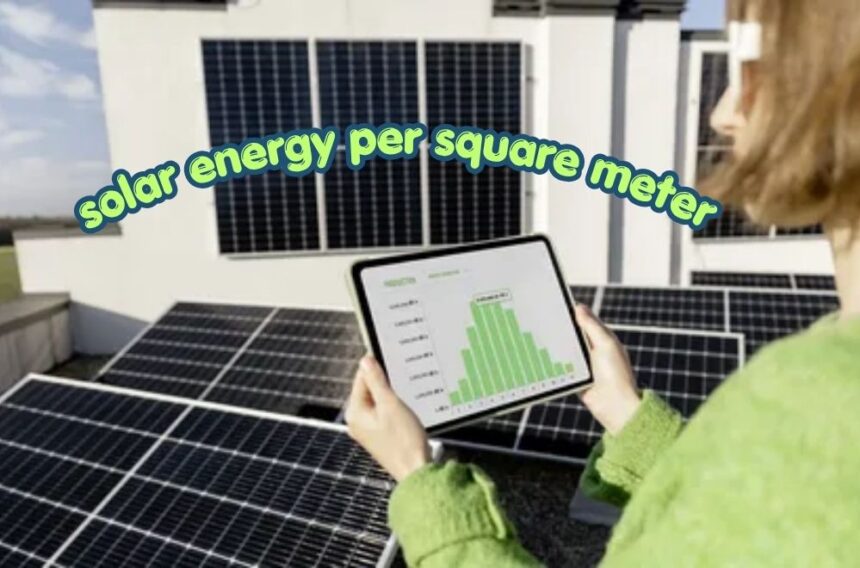
Every homeowner asking about solar panels eventually hits one critical question — how much power can a single square meter actually deliver? Understanding solar energy per square meter gives you a real measuring stick instead of just trusting a salesperson’s pitch. A standard polycrystalline panel sitting under Standard Test Conditions (STC) pushes out roughly 150 to 200 W/m² of peak power, while a premium high-efficiency monocrystalline panel jumps that number up to 220 to 300 W/m² — a meaningful gap when you are covering a real roof.
At the cutting-edge end, lab prototypes using tandem cell technology have already cracked 400 W/m², and commercial production of these cells is projected to arrive around 2030. For now, the practical range sits between 80 W/m² for thin-film options all the way up to 300 W/m² for the best monocrystalline units on the market. Knowing where your chosen panel sits inside that range tells you far more about long-term value than any brochure ever will.The truth is that solar energy per square meter is the most honest measuring stick available, cutting through marketing noise and grounding every conversation in real electricity output numbers that directly connect to your monthly electricity bill.
Read More About Solar Panel Installation
How Solar Energy Per Square Meter Translates Into Daily and Annual Output
The jump from W/m² to actual kilowatt-hours in your home is where the math gets genuinely useful. With roughly 5 peak sun hours per day, a 1m² standard panel produces between 0.75 and 1 kWh/day, while a single sq.ft of the same panel generates around 0.07 to 0.09 kWh/day — numbers that feel small until you multiply them across a full solar array. A modern 400W residential solar panel in Canada typically delivers 1.6 to 2.2 kWh of electricity per day under typical conditions, adding up to roughly 550 to 800 kWh annually depending on location and installation quality.
The formula that makes this tangible is beautifully simple: panel wattage × peak sun hours ÷ 1,000 = daily kWh. Run that for a 400W panel sitting in a spot averaging 4.5 peak sun hours and you get 400 × 4.5 ÷ 1,000 = 1.8 kWh per day before any system losses are applied. After a realistic 15% system loss accounting for inverter efficiency, wiring, dirt, and temperature effects, that number lands at approximately 1.53 kWh per day, or roughly 46 kWh monthly and 558 kWh yearly from a single panel.
A commercial solar farm operating across 10,000m² with 2MW of installed capacity pushes annual electricity generation into the 2.4 to 3 million kWh range, simultaneously offsetting approximately 1,800 tons of CO₂ emissions annually. These real-world applications show exactly how solar energy per square meter scales from a backyard project all the way up to a commercial powerhouse.
Read more About Everything You Need
Key Factors That Shape Solar Energy Per Square Meter Output
No two rooftops produce identical results, and five core variables explain almost every gap between what a panel promises and what it actually delivers. Sunlight intensity is the single biggest lever controlling how much solar energy per square meter your system genuinely captures day after day — equatorial regions pull in 40% to 60% more energy annually than high-latitude areas, and a single overcast sky can slash solar energy production by 50% to 80% compared to a perfectly clear day. Peak sun hours, season, roof angle, and your specific location all feed directly into that daily output figure, which is why two identical panels installed in different cities can produce dramatically different electricity totals across a full year.
Panel Technology Comparison — Which Type Delivers More Solar Energy Per Square Meter?
Choosing the right panel technology is honestly the single biggest decision in any solar project, and the gap between options directly determines how much solar energy per square meter your rooftop actually delivers over the lifetime of the system. Monocrystalline cells built from a single solid silicon crystal give electrons more room to flow freely, producing a smaller, denser, and considerably more efficient panel that earns its 18% to 24% efficiency rating through superior material purity — the best current models like the Maxeon 7 (445W) hit 24.1% efficiency, while Canadian Solar TOPHiKu6 (470W) achieves 23%, and Maxeon 6 (440W) lands at 22.8%. Polycrystalline cells fuse many individual silicon fragments together, delivering a respectable 13% to 16% efficiency at a noticeably lower price point that makes them a genuinely cost-effective option for installations where roof space is not tight.
What Is Solar Panel Efficiency and How Is It Measured?
Solar panel efficiency describes the percentage of sunlight hitting a panel surface that successfully converts into electricity, and it has climbed steadily from around 15% to over 20% across the past decade with no signs of stopping. The official measurement happens under Standard Test Conditions (STC) — a precisely controlled environment that holds cell temperature at 25°C, sets irradiance at 1000W/m², and applies an air mass of 1.5 to simulate average atmospheric conditions. The formula that produces the final efficiency number is clean and direct: Efficiency = ([Pmax / Area] / 1000) × 100% — meaning a 1 meter square, 15% efficient solar panel produces exactly 150 watts under those controlled conditions.
Emerging technologies like perovskite material carry genuine promise of pushing solar panel efficiency past 40% in the near future, a leap that would fundamentally reshape what solar energy per square meter means for both residential and commercial installations worldwide. Real-world efficiency always trails the factory testing conditions number because wiring, busing, reflection, panel age, weather, shade, roof colour, and protective backsheeting all introduce small but cumulative losses that add up across a full year of output.
Read more About Solar Panel Installation
Why Higher Wattage Does Not Always Mean Better Performance
One of the most common and costly mistakes I see new buyers make is treating wattage as the single measure of a panel’s value — and it simply is not. A higher wattage panel sometimes earns its number purely by being a physically larger panel rather than a more efficient one, meaning two panels wearing the same high output label might demand very different amounts of roof area to deliver identical electricity. The metrics that actually matter for smart buying are total annual kWh production, available roof space, panel efficiency, cost per watt, and long-term reliability backed by solid warranty coverage — not the biggest single number in a brochure.
Full system production estimates are what serious buyers should compare across quotes rather than chasing the highest wattage label in the lineup. Polycrystalline panels at around 15% efficiency remain among the most affordable options available, making them a smart budget choice for homes with generous roof space, though their shorter lifespan relative to monocrystalline options means long-term reliability favours the premium product when longevity is a priority. Understanding this balance between panel efficiency, cost per watt, available roof space, and annual production is what separates a genuinely informed solar investment from an expensive guess.
Practical Tips to Maximize Solar Energy Per Square Meter Output
Getting the most from every square meter of installed panel starts with serious planning long before a single bracket hits your roof. A thorough shade analysis before signing any contract can save thousands — even partial shade on just a few panels drags down performance across the whole system depending on inverter setup and system design, and micro-inverters or power optimizers are the right solution when shading losses cannot be fully eliminated through placement choices. South-facing roofs with the longest unobstructed direct sun exposure always deliver the strongest annual production, but splitting panels intelligently across multiple roof faces often beats cramming everything onto one roof plane when obstructions are present.
Smart modules and module-level power electronics push system-wide electrical output beyond what individual panel efficiency ratings alone can deliver, and pairing your system with next-generation solid-state batteries can lift household self-consumption rates from around 30% all the way past 80% — keeping more of your generated electricity inside your home instead of feeding it back to the grid at lower rates. Dual-axis tracking systems guided by AI algorithms boost annual energy generation by an impressive 35% to 45% for installations where tracking is feasible. Combining smart system design, disciplined maintenance, and the right inverter setup creates a compounding efficiency advantage that pays real dividends across the full lifespan of the system.
Future Tech Breakthroughs That Will Redefine Solar Energy Per Square Meter
The most exciting chapter in solar energy has not been written yet, and the breakthroughs already happening in laboratories are genuinely staggering. Tandem solar cells — multi-layer solar cells engineered to absorb a broader spectrum of sunlight simultaneously — have already hit laboratory efficiencies of 39.7% as of 2023 data, and researchers project these cells will enter commercial production by around 2030, fundamentally changing what output per square meter looks like for everyday buyers. AI-powered tracking through dual-axis tracking systems combined with AI algorithms already delivers 35% to 45% improvements in annual energy generation for installations using this technology today.
If commercially available solar panels eventually break the 30% efficiency barrier — which serious researchers consider realistic within this decade — a 100m² rooftop could generate close to 50,000 kWh of electricity per year under favourable conditions, enough to power multiple households from a single residential rooftop.
Intelligent system design combined with energy storage and smarter grid integration is already moving everyday solar from simple electricity generation toward full energy independence for motivated homeowners. The solar revolution is not something arriving on the horizon — it is already underway, and the long-term value of getting in early only grows stronger as these innovations compound year over year.
FAQs
How much energy do solar panels produce in a day per square meter?
Under standard conditions with roughly 5 peak sun hours, a 1m² panel delivers between 0.75 and 1 kWh of daily energy production.
How many solar panels do I need for a house?
Most Canadian homes need somewhere between 12 and 25 panels, though the right number depends entirely on your electricity use, available roof space, and local solar conditions.
What is the 20% rule for solar panels?
The 20% rule is a practical planning buffer that accounts for the gap between ideal output calculation and real-world performance. Most experienced installers recommend reducing your raw production estimate by 15% to 20% to absorb inverter losses, wiring resistance, temperature effects, dirt, snow, and other real-world factors that shave output daily for solar energy per square meter