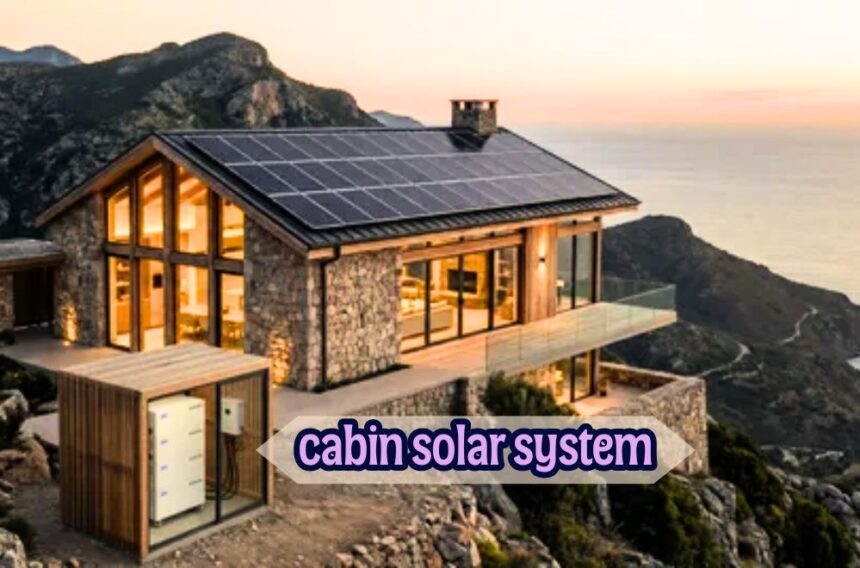
Understanding Your cabin solar system Power Needs Today
When I first built my remote cabin, electricity seemed like a distant dream. The power grid simply did not reach our location. That changed when I discovered how a cabin solar system could transform independent living. Many people assume off-grid power is complicated. Your cabin solar system starts with one basic question about what devices you actually need to run.
Real Power Consumption in Remote Cabins
Most cabin owners get this wrong from the start. They buy solar panels first, then worry about storage later. I learned the hard way that this approach costs thousands more. Your actual energy needs matter far more than panel size.
Calculate your daily watt-hour usage with precision. A typical cabin might use LED lights pulling 10 watts for 5 hours daily. That gives you 50 watt-hours just for lighting. Add a laptop requiring 60 watts for 6 hours. Now you need 360 more watt-hours. Your refrigerator draws 100 watts for 24 hours straight, consuming 2400 watt-hours per day. This totals 2810 watt-hours needed daily.
Most remote cabins require between 5 to 8 kilowatt-hours per day for comfortable living. Understanding this number drives every other decision in your cabin solar system setup.
| Calculating Appliance Usage | Daily Consumption | Total System Requirements |
| LED Lights | Heating Systems | Small Cabin Daily Total |
| Laptop Power | Entertainment Devices | Medium Cabin Daily Total |
| Refrigerator | Cooking Appliances | Large Cabin Daily Total |
| Water Pump | Device Charging | System Sizing Formula |
Why Your cabin solar system Battery Matters Most
Here is something the solar industry rarely emphasizes clearly. Your battery storage is more critical than your panels. I watched neighbours buy expensive panels but cheap batteries. Those systems failed within two years.
A lithium battery holds energy captured during sunny hours. It releases that power when clouds arrive or night falls. LiFePO4 batteries have become the standard choice today. They last 10 to 15 years in typical cabin applications. Lead-acid batteries cost less initially but need replacement every 3 to 5 years.
Your battery bank must handle something called days of autonomy. This means consecutive days when weather prevents solar power generation. A good cabin requires 3 to 5 days of backup storage. If your cabin sits in a cloudy region, increase this to 5 to 7 days. Battery capacity directly determines your system cost and reliability.
Read more about: batteries agm batteries
The Role Your cabin solar system Inverter Plays
Your solar inverter converts direct current power into alternating current. Most cabin appliances need this conversion to operate properly. Choosing the right inverter affects efficiency and device safety.
Sensitive electronics like computers and medical devices require this quality. Modified sine wave inverters cost less but can damage equipment. A 3000-watt inverter powers most cabin appliances simultaneously.
Your charge controller works alongside the inverter. It regulates power flowing to batteries from solar panels. An MPPT charge controller captures 20 percent more energy than older models. PWM controllers cost less but waste more power. Think of the charge controller as the traffic cop directing electrical flow throughout your system.
Assembling Your Complete cabin solar system Setup
Building your complete cabin solar system requires matching components carefully. A 500-watt system suits small seasonal cabins with minimal needs. A 2000-watt system powers year-round living for small families. A 5000-watt system handles modern appliances in larger cabins.
Your solar panel array should face true south in most regions. Tilt angles vary by latitude. Panels need clearance from trees and shadows. Most cabins use between 4 and 12 panels rated between 400 to 600 watts each.
Your wiring must handle the power moving through your system. Undersized wire creates heat and power loss. Proper grounding protects people and equipment. Many cabin owners hire electricians for this critical step. Your entire installation fails safely if just this step gets wrong.
Read more about: wurduxalgoilds
Making Your cabin solar system Energy Efficient
Energy efficiency saves you from buying massive battery banks. I reduced my cabin’s power needs by 40 percent through smart choices. This cut my system cost nearly in half.
LED lighting consumes 75 percent less power than traditional bulbs. A propane stove eliminates the need for electric cooking power. Propane water heaters work without electricity entirely. DC appliances designed for off-grid power eliminate inverter conversion losses.
Your refrigerator typically represents the largest power consumer in any cabin. A standard electric fridge draws 250 watts continuously. A solar refrigerator uses only 60 watts daily. Installing one solar fridge often costs less than expanding your entire battery system.
Managing Weather and Seasonal Power Production
Winter brings the biggest challenge to cabin power systems. Shorter days and cloud cover reduce panel output significantly. Your battery bank must sustain you through these lean months.
Cloudy regions need larger panel arrays than sunny areas. A cabin in Seattle needs roughly double the panels compared to one in Arizona. Days of autonomy become even more critical in northern climates. Many northern cabins add backup generators using propane or diesel fuel.
Seasonal shifts affect your energy production dramatically. Summer panels produce at 100 percent capacity on clear days. Winter production might drop to 30 percent of summer output. Plan your system for winter minimums, not summer averages.
| Seasonal Production Variations | Weather Impact Management | Seasonal Planning Strategies |
| Summer Peak Production | Battery Autonomy During Storms | Winter System Sizing |
| Winter Reduced Production | Backup Generator Integration | Summer Excess Production |
| Spring Transitions | Snow and Ice Removal | Geographic Considerations |
| Cloudy Region Challenges | Humidity and Moisture Effects | Predictive Load Management |
Expanding Your cabin solar system Over Time
Building scalability into your system prevents expensive rebuilds later. Start with what you need today. Design for tomorrow’s additions now.
Most cabin solar systems use 12 volt or 24 volt battery banks initially. Additional solar panels connect easily to existing systems. Most inverters allow upgrades without complete replacement.
I expanded my cabin system three times over ten years. Each time I added components rather than replacing everything. This approach saved thousands of dollars compared to starting over. Think long-term when designing your power setup today.
FAQ About cabin solar system Solutions
What happens to my cabin solar system during extended cloudy periods?
Your battery storage keeps your cabin powered through cloudy weather. A properly sized battery bank with 3 to 5 days of autonomy handles most weather patterns. If cloudiness persists beyond this, a backup generator provides additional charging power. Many cabin owners run generators occasionally during winter months without regret.
Can I really live comfortably with a cabin solar system year-round?
Yes, thousands of people do this successfully in North America. Your comfort depends on energy efficiency choices. Propane handles heating and cooking. A well-designed battery bank keeps lights and devices running. Modern cabin solar systems provide reliable, independent power for full-time living.
Should I install my own cabin solar system or hire professionals?
Professional installation ensures safety and proper operation. Most building departments require licensed electrician work anyway. Your investment in professional installation pays dividends in system reliability and lifespan.
How much does a complete cabin solar system actually cost today?
Small seasonal systems run 3000 to 5000 dollars. Medium year-round systems cost 8000 to 15000 dollars. Large luxury cabin systems exceed 25000 dollars. Regional price differences matter too. Installation labour costs vary dramatically based on location and complexity. Always get multiple quotes before committing.
Making Your Power Independence Real
Building a cabin solar system transforms remote living from impossible to achievable. Your energy independence starts with honest calculations about power needs. Prioritize battery storage and efficient appliances over large panel arrays.
Take time planning your system carefully now. This prevents costly mistakes later. Your cabin solar system will power your independence for decades when built right.