Solar Energy Courses in Canada: A Practical Path to a Green Career
Canada is racing toward a cleaner grid, and that shift needs trained hands, not just good intentions. Programs across the country now teach real skills, from wiring a panel to reading a permit. If you are searching for solar energy courses in canada, you are joining a wave of career changers, students, and tradespeople who want steady work in a growing field.
Why Solar Energy Courses in Canada Are Growing Fast
The Government of Canada has set a clear target: net zero operations by 2050, and that goal needs a skilled green workforce on the ground. Programs like the Green Skills Academy were built with this in mind, and they specifically welcome underserved communities, underrepresented communities, Black, Indigenous, People of Colour, newcomers, Women, and gender diverse individuals. This focus on diversity and inclusivity is not an afterthought — it is the whole point of the Relay Education approach to solar installation training.
Read More About Solar Panel Installation
Building Skills, Building Futures
Picture ten cohorts and 222 participants spread across four provinces, each person learning the same core skills. Students study electricity, solar energy basics, and get hands-on installation experience before earning real industry certifications. One graduate, Snehal Khade, moved from a finance professional role at JP Morgan and the Royal Bank of Canada into a solar job market built for a fresh start in green careers.
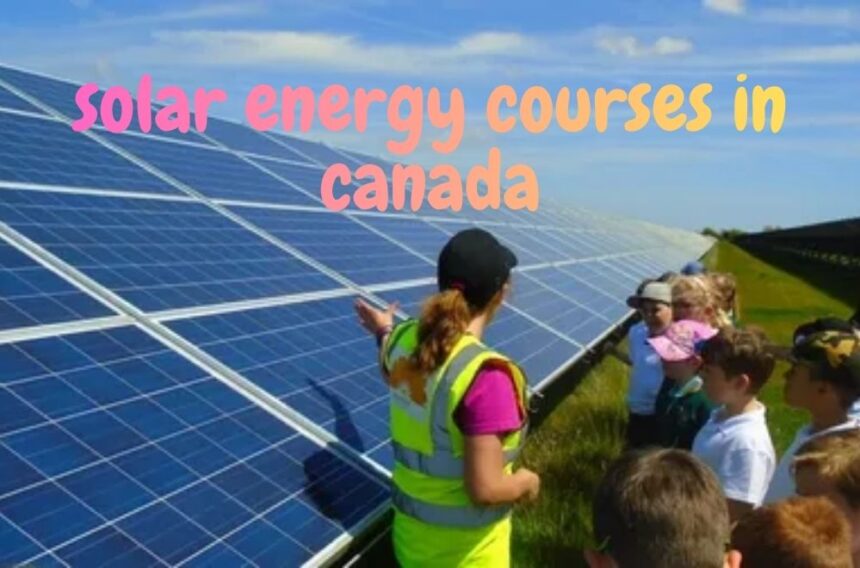
The training goes beyond the technical side, since students also build a roof from scratch and install shingles, mounting racks, and photovoltaic solar panels. Soft skills matter too — a strong resume, networking, and interviewing skills all get real classroom time. Field trips make the lessons stick, from touring the rooftop solar array at the Edmonton Expo Centre to installing panels at Riverstone Campus with Elephant Thoughts, and learning sustainable urban farming from the Toronto Black Farmers & Food Growers Collective at Downsview Park. This is what strong solar energy courses in canada look like in practice: real people, real timelines, real jobs.
What Solar Energy Courses in Canada Teach About the Sun
Every good solar program starts with the science of light itself, because you cannot design a system without knowing your sunlight intensity. Instructors explain solar radiation, the difference between irradiance and irradiation, and how peak sun hours are measured in kWh/m²/day. Students learn to read a bell curve of light through the day, spot the 1000 W/m² benchmark, and understand why a PV system performs differently under a pink range near 7.4 peak sun hours per day compared with a blue zone closer to 2.2 peak sun hours per day.
From there, courses connect this solar resource to real numbers: system size, orientation, and PV system sizing all shape how much electricity production a home or business can expect. Free resources such as RE100 introduce beginners to basics of electricity, voltage, current, and resistance, while a companion math refresher backs up anyone rusty on fundamental math skills. Together, these lessons build the foundational electrical knowledge every installer needs, whether the job is a single-family home or a multi-megawatt installation, and this is exactly the kind of technical depth that separates serious solar energy courses in canada from a weekend workshop.
Read more About Everything You Need
Standards, Safety, and Bigger Support Systems
Good training does not stop at installation; it also covers the paperwork that keeps everyone safe. Groups such as IREC, working with the ICC, IAEI, NASFM, PNNL, and Slipstream, built free courses on plan review, electrical compliance, structural compliance, and fire code compliance for residential solar PV systems. This kind of permitting process training, offered through CleanEnergyTraining.org, lets local officials and code officials approve clean solar energy installations faster and with more confidence, which is why the best solar energy courses in canada now include a short module on codes and permitting, not just panels.
On the funding side, Green Skills Bootcamps, the Lifetime Skills Guarantee, and Apprenticeships all lower the cost of getting qualified. Regional Programmes run by local councils add another layer of support in renewable hotspots across the country. None of this replaces classroom time, but it does mean funding opportunities, bursaries, and employer sponsorship are often within reach for anyone willing to ask.
Picking the Right Solar Energy Courses in Canada
Not every program is equal, so accreditation matters more than a flashy course title. Look at who built the course, since partnerships with real energy firms and industry experts tend to produce training that matches actual real-world needs. Also weigh the mode of delivery — online courses offer flexibility, while in-person formats or hybrid formats give you hands-on opportunities with tutors and peers.
Course length matters just as much as content, since some programs run for a few weeks while others stretch across a full year. A strong course blends theory and practice, so classroom learning always pairs with practical application before you are expected to handle technical roles alone. Before you enrol, check the cost, and ask directly about government subsidies or workplace support that might cover part of the bill.
Who These Courses Fit: Entry-Level to Advanced
Total beginners can start with entry-level qualifications, which need no previous experience and focus on core concepts and basic technical skills. Recent graduates and career changers both fit well here, since the material assumes nothing going in. For tradespeople already working as electricians or plumbers, advanced courses and CPD options build on existing knowledge instead of starting from zero, and that alone is proof that solar energy courses in canada work for more than one type of learner.The latest solar energy courses in canada now blend hands-on installation work with real industry certifications
Career switchers coming from non-technical backgrounds, like business or IT, can lean on bridging-style programs that build foundational knowledge step by step. These options exist because the renewable field genuinely needs people from different paths, not just engineers. Whatever your starting point, a well-chosen course turns curiosity into a real, working set of basic technical skills.
Where This Is All Heading
The next few years will bring more digitisation into solar work, with SCADA systems, AI, and IoT technology helping optimise energy production and energy distribution in real-time. Short microcredentials are becoming popular too, letting working people build targeted skills without committing to a full-time programme. As demand grows, expect more solar energy courses in Canada to fold in this kind of digital training alongside the basics, blending solar energy with fields like data science and software engineering through real integration of disciplines.
I have sat in on a few of these classes myself, and the mood is nothing like a dry lecture hall — it feels more like a workshop full of people rebuilding a career on purpose. If you are weighing your options, remember that good solar energy courses in canada combine real tools, real mentors, and a clear path to paid work. Whether your goal is installation training or a design-focused role, the right program turns interest into a rewarding career you can stand on, literally, on a rooftop.
FAQs
1. What do solar energy courses in Canada actually teach?
They cover the full path from theory to tools — solar radiation, electricity, panel mounting, and safety codes — plus soft skills like a strong resume and interview practice, so graduates leave ready for the solar job market.
2. Are these courses open to people with no technical background?
Yes. Many programs, including the Green Skills Academy, are built for newcomers, career changers, and people from non-technical backgrounds, with entry-level qualifications requiring no previous experience
3. How long does it take to finish a solar training program?
It depends on the format. Some run for a few intensive weeks, while others stretch across a full year, blending theory and practice with real installation experience.
4. Is funding available for solar energy courses in Canada?
Often, yes. Look into funding opportunities, bursaries, employer sponsorship, and regional support like Green Skills Bootcamps or the Lifetime Skills Guarantee before assuming a course is out of reach.