Introduction
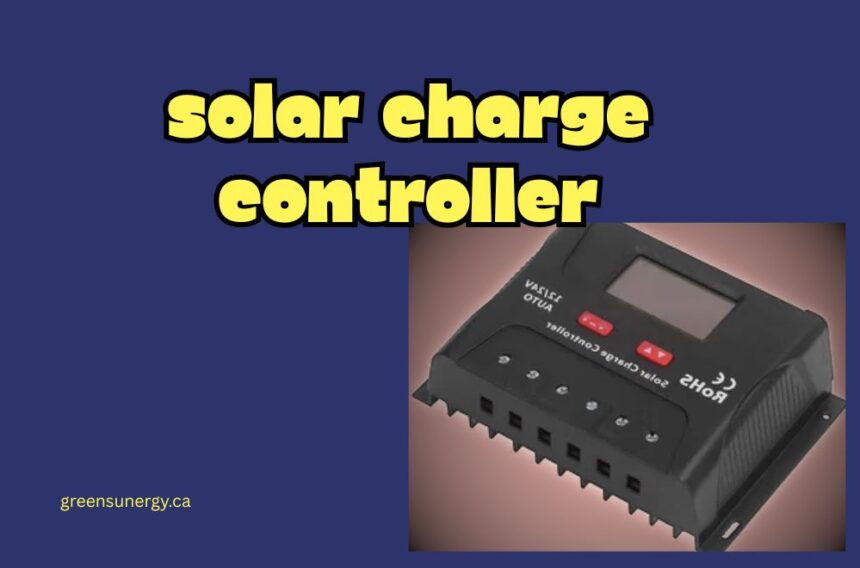
A solar charge controller is a critical component that manages the power flowing from your solar panels into your battery bank. This intelligent device regulates the voltage and current to prevent overcharging and ensure optimal battery performance. Without a charge controller, your batteries would suffer damage and drastically reduce their lifespan.
Modern solar controllers monitor energy flow in real time, maximizing the efficiency of your entire renewable energy system. They protect expensive equipment from voltage spikes and dangerous current surges. Whether you are building an off-grid cabin or expanding your solar setup, a quality charge controller is absolutely essential for reliable power management and battery longevity. This device transforms how solar panels deliver power to your system.
What Is a Solar Charge Controller and Why Does Your System Need One?
A solar charge controller is a critical component that regulates voltage and current flowing from your solar panels into your battery bank. Without this essential device, your batteries would overcharge, overheat, and fail prematurely. Every off-grid, hybrid, and battery-backed solar system—from remote cabins to agricultural installations—requires a solar charge controller to operate safely and efficiently throughout the year.
The primary function of a solar charge controller is to manage the flow of electricity between your solar panels and battery storage. By controlling how energy is delivered to your batteries, a charge controller extends battery lifespan and improves overall system performance. This is particularly important in regions with variable weather conditions and seasonal light fluctuations.
Why a Solar Charging Controller Is Essential for Your Battery System
Battery protection is the cornerstone of any reliable solar power setup. A solar charge controller prevents overcharging and voltage damage that can permanently degrade battery chemistry. Overcharging occurs when excess voltage from the solar panels continues flowing into the battery after it reaches full capacity—a situation that generates heat, accelerates degradation, and significantly shortens battery lifespan.
Modern solar systems generate far more power than older setups, making a quality solar charge controller more important than ever. Whether you’re powering an off-grid cabin, RV, remote home, or backup power system, a charge controller ensures stable operation and protects your investment. The device automatically regulates charging cycles, preventing over-discharge scenarios that damage lead-acid batteries and maintaining optimal conditions for lithium batteries.
You Might Also Like :serlig
Understanding the Two Main Types of Solar Charge Controller Technologies
MPPT Solar charge controller: Maximum Efficiency
Maximum Power Point Tracking (MPPT) represents the high-efficiency standard for modern solar systems. MPPT solar charge controller continuously track the optimal voltage and current from your panels, converting excess voltage into additional charging current rather than wasting it as heat. This technology can harvest up to 30% more energy compared to older methods.
MPPT solar charge controller features include:
- Up to 98%+ conversion efficiency
- Best performance for systems over 400W
- Support for 12V to 96V battery banks
- Excellent cold-weather performance
- Full compatibility with LiFePO4 lithium batteries
- Bluetooth and remote monitoring capabilities
- Ideal for residential homes, cabins, farms, and RVs
MPPT technology is best suited for larger systems, off-grid cabins, RVs with substantial panel arrays, agricultural installations, and any setup using modern lithium batteries.
You Might Also Like: solar energy toronto
PWM Solar charging controller: Cost-Effective Simplicity
Pulse Width Modulation (PWM) controllers use a simpler switching mechanism to taper charge into your battery bank as it approaches full capacity. While less efficient than MPPT, PWM technology is cost-effective and proven, best suited for smaller, straightforward systems where upfront budget is the priority.
PWM solar charge controller specifications include:
- Typical efficiency around 70–80%
- Lower upfront costs
- Best for systems under 200W
- Support for 12V to 48V battery banks
- Good for basic solar applications
- Limited lithium battery support
- Ideal for small RV setups, boats, and entry-level
How a Solar Charge Controller Works: The Technical Breakdown
The solar charging controller operates by monitoring the voltage output from your solar panels and the charge state of your battery bank. When panels generate voltage higher than the battery’s target charging voltage, the controller reduces the current flow. As the battery approaches full capacity, the controller tapers the charging current further, preventing the dangerous overcharge condition.
Modern controllers include load terminals that allow you to connect DC loads directly to the system. However, when an inverter is integrated into your setup, it must connect to the battery bank rather than the solar charge controller load terminals. This is because inverters require high current surges upon startup—surges that may exceed the solar charge controller’s rated capacity but that your battery bank can easily supply.
Advanced solar charging controller models provide programmable settings, allowing users to customize disconnect and reconnect voltage thresholds and select presets for different battery chemistries, including sealed lead-acid, flooded lead-acid, AGM, gel, and lithium variants.
How to Size and Select the Right Charging Controller
best sizing protects solar panels and battery bank also. Use this sizing formula:
Sizing Guidelines by System Capacity
Up to 200W System:
- Recommended battery voltage: 12V
- Recommended controller: 20A MPPT
200W to 500W System:
- Recommended battery voltage: 12V or 24V
- Recommended controller: 30A to 40A MPPT
500W to 1,000W System:
- Recommended battery voltage: 24V or 48V
- Recommended controller: 50A to 60A MPPT
1,000W to 2,000W System:
- Recommended battery voltage: 48V
- Recommended controller: 80A to 100A MPPT
2,000W+ System:
- Recommended battery voltage: 48V to 96V
- Recommended controller: 100A+ MPPT
When selecting a solar charge controller, consider your system voltage, solar panel output wattage, battery type (lithium or lead-acid), current system size, and potential future expansion. These factors ensure you choose a controller that supports your current needs while allowing for system growth.
Choosing the Right Solar Charge Controller for Your Application
Several critical factors determine whether a solar charge controller will be the right fit for your installation:
System Voltage Compatibility: Ensure the controller supports your intended battery bank voltage (12V, 24V, 48V, or higher).
Solar Panel Output: Match the controller’s input specifications to your panel array’s maximum voltage and power output. Remember that cold temperatures increase panel voltage (open-circuit voltage), so select a controller rated above your worst-case cold-weather voltage.
Battery Chemistry Compatibility: Different battery types require different charging profiles. Lithium batteries need dedicated BMS (battery management system) compatibility and specific charge voltage curves. Lead-acid batteries require absorption and float stages. The best solar charge controller for your application offers presets or programmable modes for your specific battery chemistry.
System Scalability: If you plan to expand your solar array or add battery storage later, select a solar charge controller with capacity headroom. This prevents costly replacement when your system grows.
Monitoring and Control: Advanced models offer Bluetooth connectivity for local monitoring via smartphone apps and integration with centralized monitoring systems. Multiple MPPT solar charge controller can operate in parallel on the same battery bank, automatically synchronizing charging phases for large installations.
Battery Compatibility and Long-Term Performance
These batteries offer superior cold-temperature performance, non-combustible chemistry, and lifespan exceeding 10,000 charge cycles. The best MPPT solar charge controller include dedicated lithium charging profiles that optimize charging curves for LiFePO4 chemistry.
Victron SmartSolar MPPT controllers are built for 10–15+ years of continuous Lead-acid batteries (flooded, sealed AGM, and gel types) remain viable for smaller systems and legacy installations.
operation when mounted in cool, ventilated locations. Regular firmware updates and manufacturer support extend the lifespan of quality controllers even further.
Frequently Asked Questions About Solar charge controller
Does a charge controller necessary for solar system?
Yes, any solar system connected to a battery bank requires a charge controller.
What do the numbers mean in MPPT controller model names like “100/30” or “150/60”?
The first number is the maximum PV input voltage (100V or 150V), and the second number is the maximum charge current in amps (30A or 60A).
Can I use multiple charge controllers on one battery bank?
Yes. Multiple MPPT controllers can charge a single battery bank in parallel. When connected via CAN communication, they automatically synchronize charging phases.
Does a solar charge controller can improve system efficiency?
By continuously tracking optimal voltage and current from panels, MPPT controllers harvest up to 30% more energy and minimize losses as wasted heat, directly increasing your system’s energy output.
Conclusion: Invest in Quality Charger Technology
A reliable charger is the foundation of efficient, safe, and long-lasting solar power systems. Modern MPPT controllers deliver superior efficiency and cold-climate performance, making them the preferred choice for Canadian and demanding global applications.